
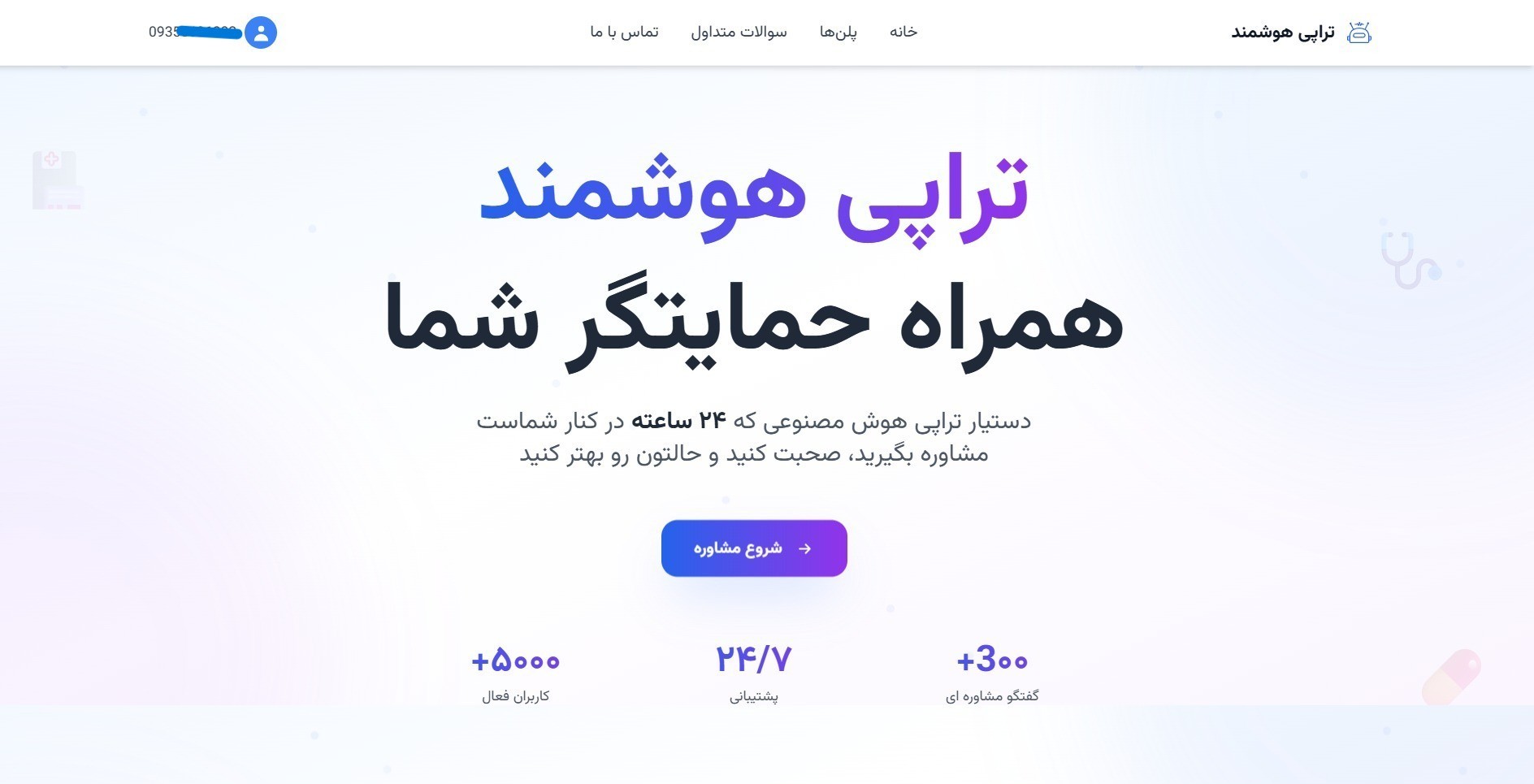
Dr AI / Care724 · AI-Assisted Support

Balancing usefulness, trust, and boundaries in AI-assisted support

As Product Owner, I evaluated the product across conversation quality, context, privacy, safety, and positioning—turning recurring issues into clearer product requirements and priorities for a pre-launch MVP.

RoleProduct Owner
DurationJun 2025–Feb 2026 · 9 months
StageMVP · Pre-launch
FocusConversation Quality · Privacy · Safety

The product challenge

The MVP could hold a conversation, but the experience broke down when responses became repetitive, follow-up questions replaced practical help, and old context surfaced in unrelated conversations.

In a sensitive emotional-support product, those experience problems could not be separated from privacy, safety, user control, and clear boundaries around what AI should and should not do.
What I owned

As Product Owner, I drove problem framing, scope, prioritization, product requirements, and key product decisions. I evaluated the chatbot through representative conversation scenarios and reviewed the broader experience across positioning, UX writing, privacy, safety, pricing, and interface direction while balancing user needs, product goals, and technical feasibility.

Core product areas

Conversation quality & context

I reviewed real chatbot behavior across representative scenarios and identified recurring issues including generic responses, repetitive empathy, question loops, low-value guidance, and irrelevant context carried over from previous conversations.

Privacy & user control

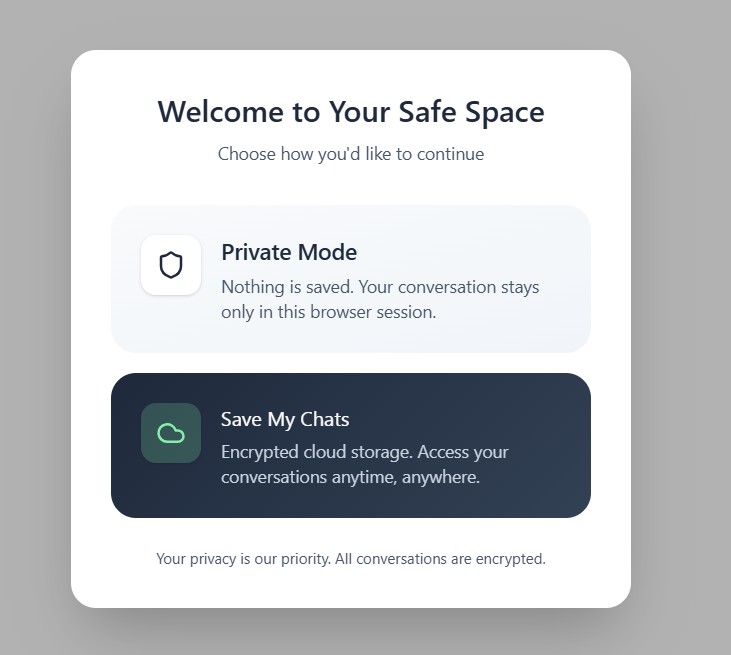
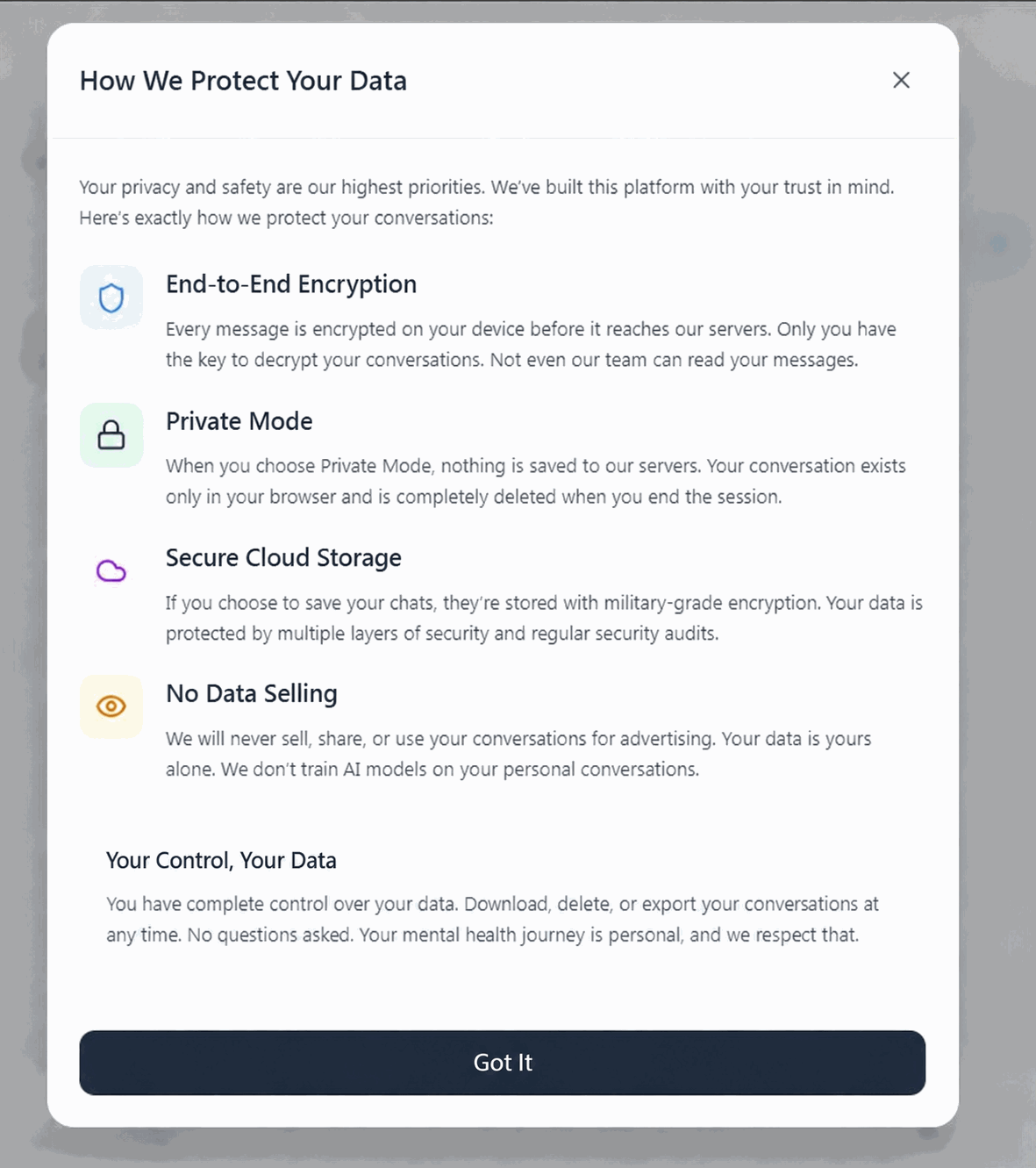
Sensitive conversations raised product questions around history, consent, deletion, and how much control users should have over stored information. Privacy was treated as part of the experience—not only as legal copy in a footer.

Safety & AI boundaries

The product needed explicit limits around medical advice, crisis situations, and professional care. AI was not intended to diagnose, prescribe medication, or replace qualified human support.

Selected product decisions

Reposition the product

The product moved away from the original “Dr AI” medical framing toward a therapy / emotional-support direction that better matched the intended experience and reduced misleading expectations about the role of AI.

Improve conversation behavior

Repeated empathy and chains of open-ended questions were not enough to create a useful experience. The product direction shifted toward more relevant, concise, and practically helpful responses.

Manage context with relevance

Conversation history should support continuity without automatically bringing unrelated past topics into a new conversation. Useful memory requires relevance, not simply more stored context.

Treat privacy as product UX

History, deletion, consent, and sensitive-data communication were considered part of the product experience and user control rather than secondary legal details.

Define AI boundaries

The product direction explicitly limited medical claims and prescribing behavior and introduced the need for escalation when conversations involve crisis, self-harm, abuse, or situations requiring professional support.

Some privacy, consent, escalation, and safety concepts were product/design directions and are not confirmed as fully implemented.

Product evaluation

I evaluated the live chatbot through representative conversation scenarios, reviewing response quality, repeated questioning, context carry-over, UX writing, and the surrounding chat experience.

These reviews helped surface product-level issues across AI behavior, memory, privacy, safety, and launch readiness.

Product direction & status

The work established a clearer pre-launch direction for the product: more relevant conversations, better context handling, stronger user control, clearer AI boundaries, and a more coherent emotional-support positioning.

A working web MVP existed, including the landing experience, chatbot, and pricing structure. Formal external user validation and post-launch product metrics were not available during my involvement.

Have a product problem?

Let’s make it clearer.