
Case Builder · Product Sprint

Turning fragmented project notes into a structured, editable case study

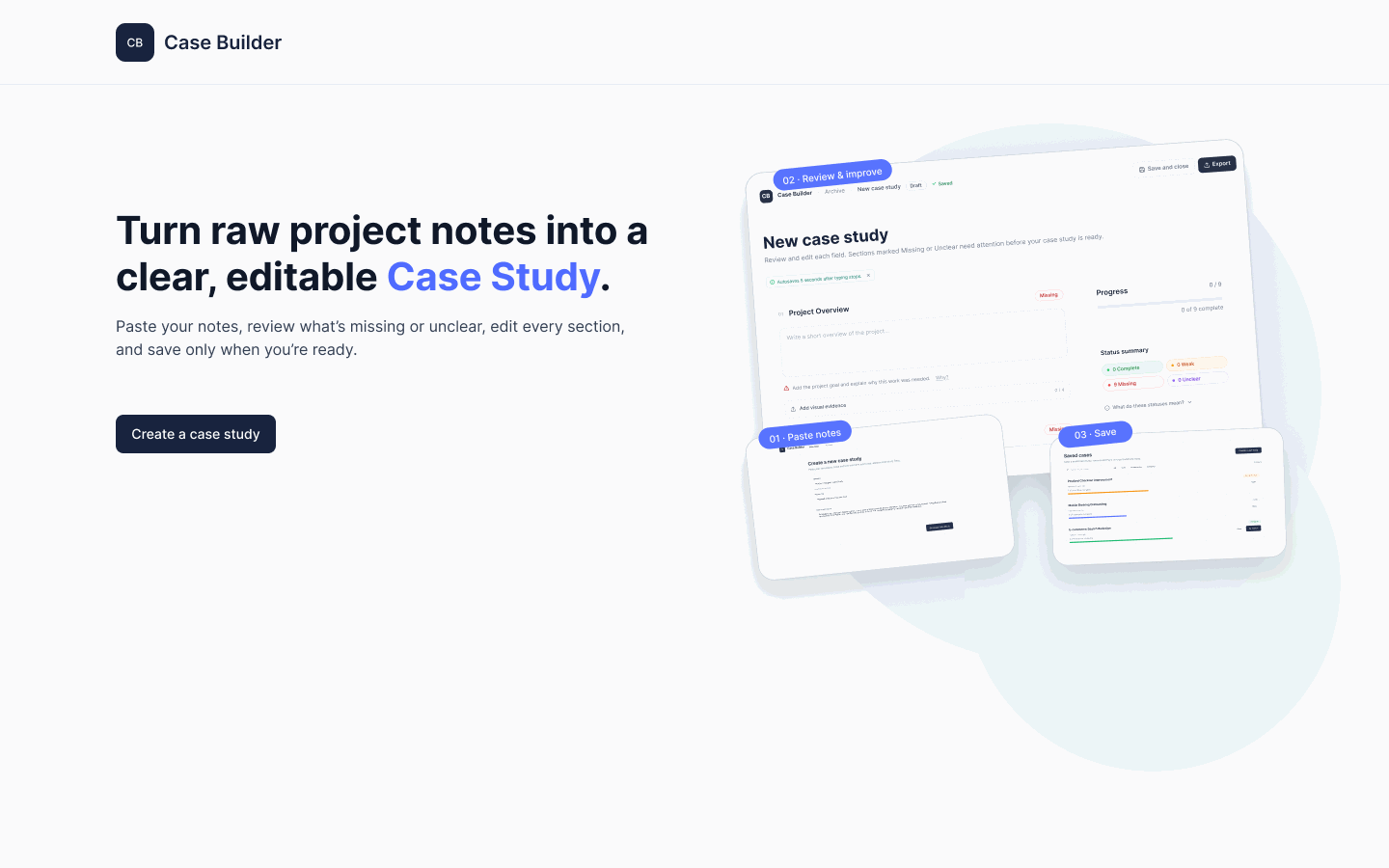
I founded Case Builder after experiencing the difficulty of turning scattered project notes into a credible case study. The product uses AI to organize existing information, surface gaps, and help Product Designers build a clearer narrative without giving up control of the final story.

RoleFounder & Product Designer
Initial MVP14-day product sprint
TeamFounder / Product Designer + Developer
FocusAI Product · Product Design · Human-in-the-loop

The problem

Product Designers often have the raw material for a case study—notes, decisions, research, and project context—but that information can remain fragmented, incomplete, or difficult to turn into a credible narrative.

The problem was not simply writing better copy. Users also needed to understand what information was missing, weak, or unclear before presenting the work as a finished case study.
What I owned

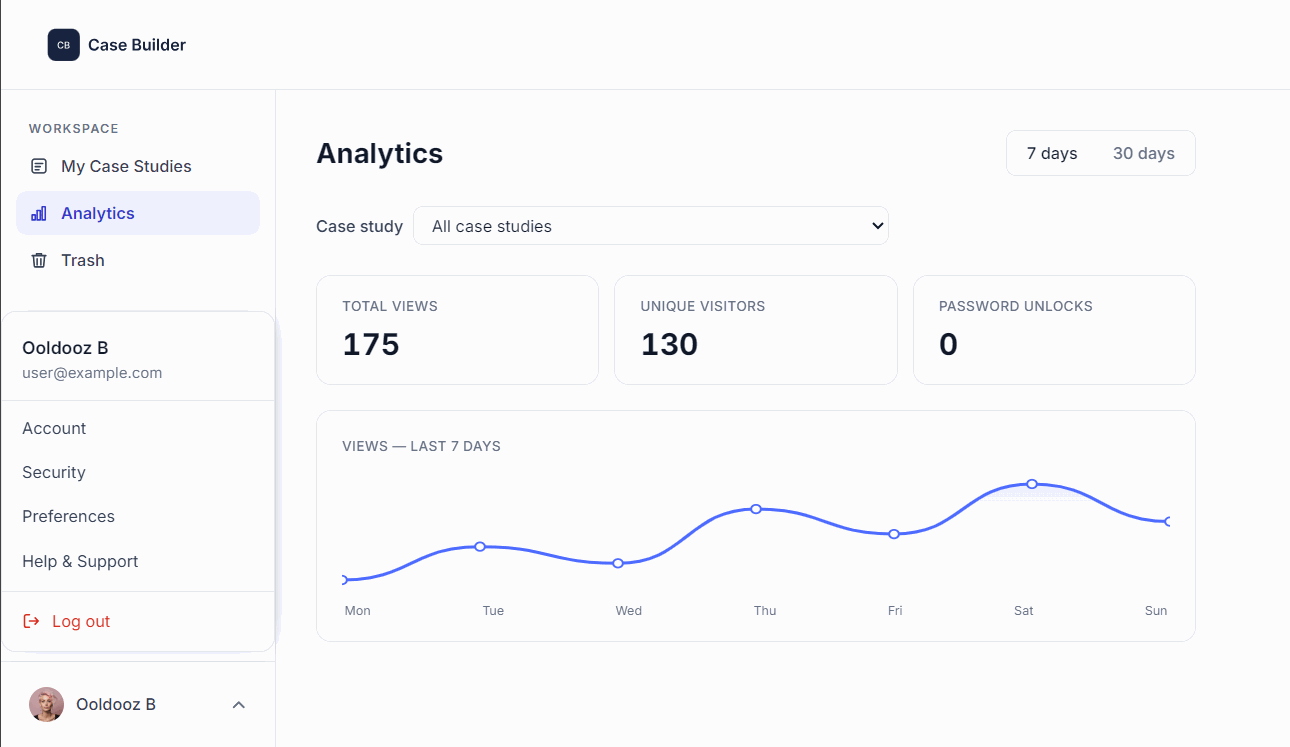
As Founder & Product Designer, I owned the product direction, scope, priorities, core UX and interaction decisions, and visual system. I worked with a developer who translated the product and design direction into the technical implementation, including the web application, API integration, and deployment.

Core product workflow

Raw project notes
Structured case-study draft
Missing / Weak / Unclear information surfaced
Human editing and review
Save / Archive / Export

AI helps organize and clarify the information the user already has. It is not intended to invent missing research, metrics, ownership, impact, or project facts.

Selected product decisions

Keep AI-generated content editable

Generated sections remain editable so the user—not the system—has final authority over the story.

Surface gaps instead of inventing them

When important information is missing, weak, or unclear, the product surfaces that uncertainty rather than filling the gap with unsupported claims.

Keep humans in the loop

The workflow was designed around review and correction. AI supports structure and clarity, while professional judgment remains with the user.

Prioritize a working MVP over feature breadth

Within the initial 14-day sprint, I kept the scope focused on the core end-to-end workflow rather than expanding into secondary features. The goal was to ship a usable product, not maximize the feature list.

Evaluation

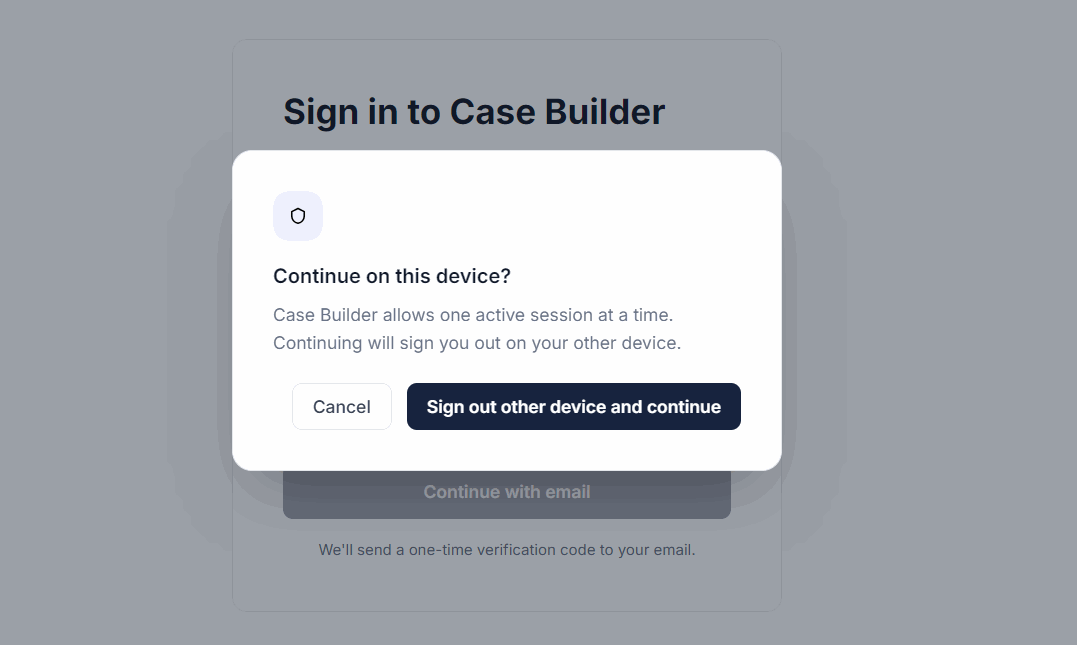
Core workflows were reviewed through scenario-based testing across different input and continuation states, including complete notes, incomplete notes, editing, saving, reopening, and continuing a case.

The next stage of the product is external user validation with Product Designers.

Outcome

The initial sprint resulted in a working MVP rather than a clickable prototype. Core functionality included structured case generation, editable content, information-quality states, saving, archiving, reopening, and export.

Case Builder is continuing beyond the sprint as an active product, with real-user validation as the next product stage.

Have a product problem?

Let’s make it clearer.